GAIL MACMILLAN is happily still in touch with her freshman roommate, Marlene Schaeffer Sklavounos, and her sorority sister, Karen Kozerski Auer. She shared that good friends truly are forever.
’74
LOUIS GEORGE APOSTOL, M.B.A., J.D. ’78, will continue to serve another term as public administrator of Cook County.
’78
CATHERINE SUMBERG, M.S.Ed., had her first creative writing published in Stanchion (Issue 22). Catherine is remembered following her passing in 2020.
’79
KIMBERLY SHANKMAN, M.A. ’81, Ph.D. ’90, provost and dean of Benedictine College, was named an “Icon of Education” by Ingram’s Magazine.
’83
Constance Litwiller (née Gehrke), M.S., was inducted into the Plainfield School District 202 Foundation for Excellence Alumni Hall of Fame for her contributions to nursing education for 34 years.
’85
Russ Damhoff, M.S.Ed. ’92, received the distinction of having Sauk Valley Community College’s basketball court named in his honor.
’86
Steve Pappageorge, M.B.A., was promoted to vice president at Moraine Valley Community College.
Ann Pederson, M.B.A., recently retired from her role as business office coordinator for the Village of Glen Ellyn. She is now studying French at the College of DuPage and is a member of the Augustana Alumni Board.
Terry Roderick was inducted into the Illinois State University Marching Band Hall of Fame.
Matt Walsh starred in the movie “The Unexpecteds.”
’88
Brent Brodeski, M.B.A. ’91, was named a “Chicago Titan” for the third consecutive year.
Marcia Countryman, M.B.A., was named the 2025 Outstanding Educator of the Year by the Missouri Society of Certified Public Accountants.
’89
Glenn Fish was named president and CEO of J.M. Huber Corporation.
Bryan Miller retired from the Illinois Air National Guard’s 182nd Airlift Wing.
’91
Leslie Strauss, M.B.A. ’99, was named global controller at Sikich.
’92
Sharon Zobel was named vice president of patient care and chief nursing officer at Silver Cross Hospital.
’94
Hon. Thaddeus Wilson, J.D., was appointed by the Illinois Supreme Court to the First District Illinois Appellate Court.
Anthony Smith was named president of Horizon Bank’s private wealth management division.
’96
Thomas Evans Jr. was elected president of Big I Illinois.
Jeffrey Paul was named executive vice president of VIPAR Heavy Duty.
’97
Scott Hartman, M.P.A, was named McHenry County administrator.
’98
Stacey Doherty was named chief marketing officer of FGM Architects.
Laura Goff was named dean of the School of Public and Human Services at Mohawk Valley Community College.
John “Ski” Sygielski, Ed.D., is set to retire following a 35-year career in higher education — marked by 22 years as president of three community colleges, including 15 years at the helm of Harrisburg Area Community College.
’99
Brian Caputo , M.P.A, Ph.D. ’15, was named director of fiscal integrity and government operations for the City of Aurora, Illinois.
’00
Angela M. Morrey was named president and CEO of the Economic Alliance of Kankakee County.
’02
Eric Ferdinand, M.A.S. ’03, was named managing director, financial services investment banking group, at Piper Sandler Companies.
Kristopher Kahler was named the Mahomet-Seymour School District’s chief school business official.
’03
Kristen Brown was appointed to serve on the NCAA Division I Women’s Basketball Committee.
Natalie Conde was selected as Top Doctor of the Year in Telemedicine by the International Association of Top Professionals.
’04
Reed Anders was named senior vice president of Alliant Insurance Services’ Employee Benefits Group.
Kelly Person was named assistant director for special education for specialized programs and services for West Aurora School District 129.
Jonathan Ruud, J.D., was appointed to associate judge of the Fourteenth Judicial Circuit for the Illinois Courts.
Stanley Schultz was named director of data centers at Ware Malcomb.
’05
Mitchell Dubinsky, M.S.Ed., was named principal of Westmoor School in School District 28.
Patrick Marsh was named the city manager of California City.
’06
Nora Balayti illustrated a new children’s book titled “My First Trip to the Bleachers: Big Feels at the Cubs Game.” She also recently opened an all-ages creative studio in Dixon, Illinois.
Jignesh Sheth was awarded a Laureate Award from the Eastern Region of the Pennsylvania Chapter of the American College of Physicians.
’07
Katrina Emmel (née Vaitkunas) , Ph.D., recently released her second young adult novel titled “Trail Rides & Starry Eyes” (Delacorte Romance). Her third young adult novel, titled “Christmas Trees & Weak Knees,” is scheduled for release later this year.
’08
Teresa Polson, M.S.Ed., Ed.S. ’18, Ed.D. ’21, was named Valley View School District’s superintendent of schools.
’09
Kiran Solingapuram Sai, Ph.D., received the Steven Larson Named Lecture on Advanced Nuclear Medicine Research award from the 2026 Mars Shot Fund for his proposal, “Microtubule PET imaging in healthy older adults.”
’11
Kendra Asbury, M.S.Ed., Ed.S. ’24, was named assistant superintendent of human resources for Freeport School District 145.
Jon Kindseth, M.P.A., was appointed as Park Forest village manager.
Ashley Michels was named communications director of the U.S. Meat Export Federation.
Andrea Setmeyer, M.A., was promoted to vice president of marketing for The Reading League.
Shawna Sterling received a 2026 Rockford-area Golden Apple award.
’13
Baraa Banibaker opened Nova Scholars Tutoring Center in Orland Park, Illinois.
’14
Karen Beverlin, M.S.Ed., was named superintendent of Washington Community High School District 308.
’15
Hayley Gotzsche received a 2026 Rockford-area Golden Apple award.
’16
Sarah Cacciatore, Ed.D., was named superintendent of Cary School District 26.
Ian Welch, M.F.A., received a 2026 South Carolina Governor’s Award for the Arts.
’17
Daniel Albers was appointed to lead Richardson Electronics’ Made-in-USA contract manufacturing expansion.
’18
Kathryn Rogalski, Ed.D., was named president of Grand Rapids Community College.
’19
Bryan Bolton, M.S.Ed., was named principal of Whittier Elementary in School District 58.
’21
Jacob Montesano was named weekend morning meteorologist for TMJ4 in Milwaukee, Wisconsin.
’24
Julie Wiejak, Ed.D., was named assistant vice chancellor for university recruitment and K-12 strategy at Purdue University Northwest.
More than 60 NIU faculty, staff members and students attended the College of Business conference—“Educating the AI-Ready Graduate: An Industry Perspective”—which was held in Barsema Hall’s auditorium in February.
Attendees heard AI insights from keynote speaker John Tsaras, ’14, head of operations for The Coca-Cola Company, who discussed how quickly AI has moved from experimentation to execution.
“AI is now embedded directly into how work gets done—in finance, operations, marketing, supply chains, customer engagement and, increasingly, decision-making itself,” Tsaras said. “It is not about installing a tool. It is about redesigning work, rethinking how decisions are made and redefining what talent looks like.”
Tsaras called this process the “new division of labor,” adding that, while AI generates insights and accelerates analysis, only humans can own the accountability and apply sound judgment to business problems.
John Tsaras kicked off the College of Business conference with his keynote presentation, entitled “The Al-Ready Graduate: Why We Will Thrive in the Age of Al.”
“So the question everyone asks is: ‘Will AI replace jobs?’” he said. “From inside industry, that’s the wrong question. AI doesn’t replace people. It replaces tasks. And when tasks disappear, roles evolve.”
Tsaras encouraged faculty and students to be courageous in the face of AI and strategically prepare to adapt along with AI.
“First, use AI. Learn how to use it deliberately,” he said. “Next, storytell. Build a narrative, not just a résumé. Strategy is visible in how you think. Lastly, have your reasons. Explain how you arrived at your answers, not just the answer itself.”
After Tsaras’ keynote presentation, Korrey Anderson, ’12, MBA ’18 (McDonald’s), Justin Gress, ’05 (insurance executive) and Ram Muthukrishnan (HAVI) joined him on stage for an informal panel discussion moderated by Ann Dzuranin, M.B.A., Ph.D., KPMG Endowed Professor of Accountancy.
Throughout the conversation, the importance of cautious courage was emphasized. Faculty and students were urged to carefully go about challenging the status quo and to stay open-minded.
OM&IS Associate Professor Biagio Palese, M.S., Ph.D., asks a question during the panel’s Q&A session.
“A lot of the time, I hear people say they don’t know where to get started with certain issues or projects,” said Gress. “AI is a place to help you get started.”
The morning concluded with breakout sessions. Faculty members worked to identify what they should adjust and keep the same in an AI-era classroom before presenting their findings to the large group.
“As AI continues to reshape industries, it’s essential that we remain committed to learning, adapting and growing,” said College of Business Dean Joan Phillips-Hernandez. “This conference marked another meaningful step forward in encouraging faculty and staff to explore practical ways we can better prepare our students to be truly AI-ready.”
The word “quantum” conjures images of particle accelerators, physics blackboards covered in equations and technologies so complex they border on the otherworldly. At Northern Illinois University, however, quantum is increasingly a practical, institutional priority—one that has been building for decades in the labs around campus and is now extending into the College of Law.
That expansion is a strategic next step in a broader NIU story: quantum has been gaining momentum at the university for years through faculty research, regional partnerships and academic program development, and law students are now becoming part of that evolution.
Fermilab Director Norbert Holtkamp and NIU Vice President Richard Mocarski sign an agreement launching NIU’s new M.S. specialization in quantum science and technology.
Richard Mocarski, NIU’s vice president for research and innovation partnerships, has worked to connect the talent of NIU faculty and students with organizations leading the quantum effort.
“We’re not investing in something new,” Mocarski said. “We’re doubling down on something we’ve been strong in.”
According to Mocarski, more than 30 faculty members across roughly eight departments are engaged in quantum-related research, including those recognized as national experts in their fields. NIU is a named partner with Fermilab’s the Superconducting Quantum Materials and Systems Center, and users of Argonne National Laboratory’s Q-Next, one of five national quantum information science research centers.
In April of this year, NIU signed an agreement to offer a joint master’s program in Quantum Science and Technology with Fermilab, a program that requires students to complete internships at Fermi or at the Illinois Quantum and Microelectronics Park and is among only a handful of its kind in the country. As NIU moves steadily from exploration to real-world applications, legal and policy considerations emerge.
The Chicago Connection: What Is the Chicago Quantum Exchange?
Chicago has rapidly become one of the world’s leading centers for quantum science and technology, with approximately $1 billion in state investment catalyzing research, commercialization and talent development across the region.
Related to this expansion is the Chicago Quantum Exchange—a hub for advancing quantum science and developing quantum technologies with real-world applications. One of the CQE’s most consequential recent initiatives is the Quantum Law Navigator, published in November 2025 in partnership with Barnes & Thornburg LLP, one of the nation’s largest law firms.
Barnes & Thornburg co-created the Quantum Law Navigator through its Quantum Technology Industry Group, co-chaired by partners Robert Karr and Martín Montes. In describing the firm’s approach, Montes characterized Barnes & Thornburg as standing “at the intersection of law, policy and innovation, guiding quantum technology companies, research institutions and investors as they move from scientific discovery to market adoption.”
The QLN is organized around safeguarding national security while fostering innovation, securing adequate and sustained funding, solving the growing shortage of skilled quantum professionals, and reducing supply chain vulnerabilities. The QLN identifies the central problem clearly: “Scientists and technologists do not always understand the law, and lawmakers and lawyers do not always understand the science. This disconnect could hinder the development of a robust, sustainable US quantum economy by favoring large institutions who can afford legal teams while discouraging smaller, less-resourced institutions and innovators.”
Montes notes that quantum does not require entirely new legal frameworks, “there are existing frameworks that will apply in the quantum space,” but that the intersection of these disciplines creates complexity that most practitioners are not yet equipped to navigate.
The connection to NIU came through the university’s existing quantum partnerships. As Montes described it:
“We became aware of NIU’s broader focus on quantum and its partnerships with Argonne National Laboratory and Fermilab. From there, we partnered with the college to present the Quantum Law Navigator to law students, NIU faculty and staff and the law school leadership team.”
A course in Quantum Law, set to be taught by Karr and Montes, is currently under development and expected to be available to NIU law students beginning in fall 2027.
The College of Law Enters the Conversation
In February 2026, NIU’s College of Law hosted a campus-wide presentation featuring Karr and Montes. Titled “How Quantum is Changing Jobs, Industries and Opportunities,” the event drew students, faculty and staff from across disciplines and signaled the law school’s intent to position itself as an active participant in the quantum ecosystem.
Daniel S. McConkie, Jr.
NIU’s Director of Faculty and Academic Affairs at the College of Law, Daniel S. McConkie, Jr., is involved in the effort to build that institutional bridge. McConkie describes the core legal stakes in accessible terms.
“The technology used to protect our information is currently sufficient because the method they use far exceeds the ability of any existing computer to crack, but a quantum computer could crack virtually any code we use within a couple of days.”
That single fact raises an enormous range of legal questions related to national security regulation, export controls on quantum hardware, intellectual property rights and the strategic investment in creating immigration pathways for skilled technical workers.
According to the CQE, the region could expect 200,000 new jobs by 2035. This means that legal professionals are needed at every level of that growth, from advising startups on venture capital structures to helping employers navigate immigration law to bring in specialized talent.
Heidi Frostestad
Associate Dean Heidi Frostestad, who oversees technology and AI-related curriculum at the College of Law, brings a different vantage point to the quantum conversation—one grounded in the school’s existing strengths and its mission as a public institution.
Quantum law, in her view, is a natural extension of NIU’s strong interdisciplinary profile, as law intersects many disciplines across campus. It offers another avenue for students to flourish and build cross-campus partnerships.
NIU physicists and representatives tour Fermilab’s Superconducting Quantum Materials and Systems Center before the April 29 ceremony announcing the new master’s specialization.
For first-year law students who might wonder why quantum matters to them, Frostestad notes that the large projected regional job growth will require lawyers to advise on hiring, governance and local and national law.
“AI and quantum law will be in the future, and we will provide access to the technology resources necessary to equip our students with this next industrial revolution.”
What Comes Next
NIU continues to explore and develop interdisciplinary frameworks across the university’s colleges, including law, policy, education, business and the sciences to connect faculty, students and external partners across the quantum ecosystem.
For the College of Law, the immediate priorities are curriculum development, student engagement and deepening the partnerships with the CQE and organizations like Barnes & Thornburg.
From intellectual property and cybersecurity to business regulation and ethics, the rise of quantum technology is expected to reshape the legal landscape.
“There are going to be numerous impacts with the development of the quantum law initiative,” Frostestad said.
If the quantum era requires lawyers, and by all indications it will require a great many of them, Northern Illinois University intends to be the institution that trains them.
“Are you passionate about making a difference in the world? Look no further!” reads a public job posting on LinkedIn.
The mission is compelling. The language is urgent.
The job description continues. Here comes the catch.
“This is an unpaid internship.”
Professional work experience matters to students, but so does the cost of unpaid internships—especially when rent and tuition are due.
Nationally, the average intern earns just over $23 an hour, according to data from the National Association of Colleges and Employers’ 2026 Guide to Compensation for Interns and Co-ops. For nonprofit and grassroots organizations operating on lean budgets, meeting that figure can be challenging, so interns go unpaid. For humanities students drawn to service and community impact, that reality can turn opportunity into a barrier—especially for those without a financial safety net.
Lidia Marquez
Lidia Marquez, a double major in Spanish and operations management and information systems, took fewer shifts from her two paid jobs for time at an unpaid internship with Northern Public Radio’s WNIJ Hola. She lives at home and receives financial aid to cover tuition, but she still has monthly expenses, including medical bills.
“I had to adjust my payment plans and be extremely careful with my spending to ensure I could cover essential expenses like my phone bill,” Marquez said. “I went from working 18 to 25 hours a week to only 10 to 14 hours to balance this internship with five classes and extracurriculars.”
For students like Marquez, access to meaningful opportunities often hinges on what’s manageable.
Now, with a $1.5 million grant from the Mellon Foundation, the nation’s largest supporter of the arts and humanities, NIU is working to remove financial barriers to internships. The grant will support a new program to dramatically expand paid, credit-bearing experiential learning opportunities for undergraduate students in the humanities.
Amanda Durik, Ph.D., interim dean for the College of Liberal Arts and Sciences and a professor in the Department of Psychology, estimates that the grant will support up to 40 interns each year. Through structured internships aligned with their coursework, the program will give humanities students the freedom to choose opportunities based on impact, relevance and professional growth.
“These additional internship opportunities will help students develop and apply innovative ideas that can positively impact communities and broader populations,” NIU President Lisa C. Freeman said. “Support from the Mellon Foundation grant will provide the critical resources necessary for these students to fully commit to and advance this important work.”
Anna Wittenkeller
Anna Wittenkeller, an English major with a minor in communication studies, hopes to pursue a career in publishing. She serves as an unpaid editorial intern at Bridge Arts, a small independent arts journal that amplifies the work of underrepresented artists across Chicagoland.
Like Marquez, Wittenkeller reduced her paid hours at a restaurant to make the opportunity possible—a trade-off she made to gain experience in her desired field. She works roughly 10 unpaid hours and nearly 15 paid hours while juggling classwork. This schedule leaves no time to explore student organizations or campus activities.
Wittenkeller said that compensation would have affected the range of opportunities she felt able to pursue.
“I work remotely,” she said. “Gas is expensive. If a grant were available to help pay me while commuting to the city or wherever I needed to go for an in-person internship, I would have looked harder for those and worried less about the cost of transportation. I also would have considered an internship that spanned over the fall and spring semesters to gain more experience.”
By improving access to in-person roles, paid internships can also jump-start a student’s professional trajectory.
According to the NACE 2025 Internship and Co-Op Report, in-person internship programs report job offer rates nearly 16 percentage points higher than those of hybrid programs, underscoring the professional advantage of on-site experiences.
Eryn Lent
Eryn Lent, a transfer student from Elgin Community College majoring in English, works as a copy editor and social media intern at WNIJ. Her role is hybrid, and the time she spends on-site has strengthened her relationships with her supervisor and mentors, who provide real-time feedback and professional guidance that extend beyond her assigned tasks.
“They have been amazing to work with and genuinely want to see me succeed,” Lent said. “Being on-site has helped me build professional relationships and confidence, making my experience at WNIJ truly meaningful.”
Experiences like Lent’s illustrate the formative moments internships can provide. Whether bridging classroom theory and professional practice, expanding professional networks or gaining clarity about what they want in a career, students can emerge from a single internship with a new perspective.
But internships don’t just fill résumés or clarify futures; they also strengthen organizations and benefit the communities they serve.
Cynthia Grijalba Duran
Cynthia Grijalba-Duran, a Spanish major with a minor in deaf studies who works as a translator in a hybrid role at Rockford-based cultural organization La Onda, has experienced that connection firsthand. Her work supports language accessibility across the city, giving her a sense of pride and purpose rooted in tangible community impact.
“A lot of local businesses have both English and Spanish advertising and writing in their windows,” Grijalba-Duran said. “My work on the translation team is not only relevant for providing information to the community, but also a necessary connection to language accessibility for Rockford residents.”
Grijalba-Duran believes internships are especially vital for humanities students, whose skills are often closely tied to social connection, storytelling and community engagement.
“There are very passionate NIU students in our halls waiting for an opportunity to share and implement their own innovative ideas to benefit entire communities and populations,” Grijalba-Duran said. “The Mellon Foundation grant could give them the extra support needed to fully dedicate themselves to that work.”
President Freeman echoed that broader mission, noting that the new internship program will “deepen our students’ understanding of critical societal issues, including racial and economic inequality, environmental justice, food security and cultural preservation.”
In addition to directly supporting students, the grant will fund a dedicated internship coordinator position—an essential component for sustaining and scaling the program.
“A dedicated internship coordinator will connect students with meaningful placements and manage the program from start to finish,” Durik said, noting that NIU is well positioned to expand both new and existing opportunities through its long-standing partnerships.
Spanning from December 2025 through November 2030, the grant includes endowment support for long-term sustainability. An additional $1 million from the Mellon Foundation will be unlocked once NIU secures $1 million in matching donor support, bringing the Mellon Foundation’s total investment at NIU to $2.5 million.
Together, the grant and matching funds lay the groundwork for a sustainable humanities internship program—keeping paid opportunities within reach for humanities students well into the future.
“Internships matter long after the experience itself,” said Freeman. “They give students meaningful work, valuable connections and the confidence to step into professional spaces—shaping not only where their careers begin, but how far they’re able to go.”
Gifts to the College of Liberal Arts and Sciences Endowment for the Humanities Internship Fund help unlock an additional $1 million in Mellon Foundation funding—expanding paid internship opportunities that connect students to meaningful careers.
For residents of Oak Crest DeKalb Area Retirement Center, the third Thursday of every month is always a cause for celebration. On that day, residents gather for dinner and cake to celebrate everyone with a birthday that month.
In recent months, however, residents have had even more to look forward to. Since September 2025, a partnership between Oak Crest and the NIU School of Music has brought small ensembles from the school to perform a post-birthday party concert in the Vista Room of the main building.
Sally Stevens has lived at Oak Crest for more than 30 years, including during her final years working as secretary to the NIU President, a job she held for 32 years under six presidents from Leslie A. Holmes through John E. LaTourette. She was instrumental in suggesting live music from the university would be a wonderful addition to the entertainment offerings at the center.
“I thought it would be great for the students to be able to use it as a rehearsal, and for us to get to listen to some good music,” she said.
Stevens has been a long-time generous supporter of the arts at NIU and still attends plays and concerts on campus.
Residents of DeKalb Area Retirement Center enjoy music from Guys’ Guys, part of a program where ensembles from the NIU School of Music perform at Oak Crest’s monthly birthday celebrations.
“Not everyone here can get out to go to things like this,” she said. “It is so nice that NIU is able to bring this kind of entertainment here for all of us to enjoy together.”
Oak Crest’s Director of Residential Programming Megan Frame met with members of the NIU College of Visual and Performing Arts Senate to explore ways a partnership to bring the arts to Oak Crest could be mutually beneficial. Not long after, the School of Music made a commitment to send an ensemble to perform at Oak Crest each month during the academic year. The style of music varies from string quartets to chamber music ensembles, NIU’s Mariachi band and jazz groups.
Hope Willett, a Malta, Illinois, native who now lives at Oak Crest, says she and the other residents look forward to the concerts.
“We get to enjoy a variety of music,” she said. “The students are so talented.”
A recent birthday celebration featured Guy’s Guys, a seven-piece ensemble made up of NIU Jazz Studies students. A crowd of nearly 90 residents toe tapped and clapped along to the music.
“They love it,” Frame said. “After every concert someone always tells me how much they appreciate having the students here.
“Music is something that older adults can always enjoy,” Frame continued. “The music professors have been very supportive, and they and the students are so easy to work with.
“It’s something we hope to keep going for a long time.”
For years, Katelyn Kaechele’s future after high school felt overwhelming. Then she spent a week living on a college campus.
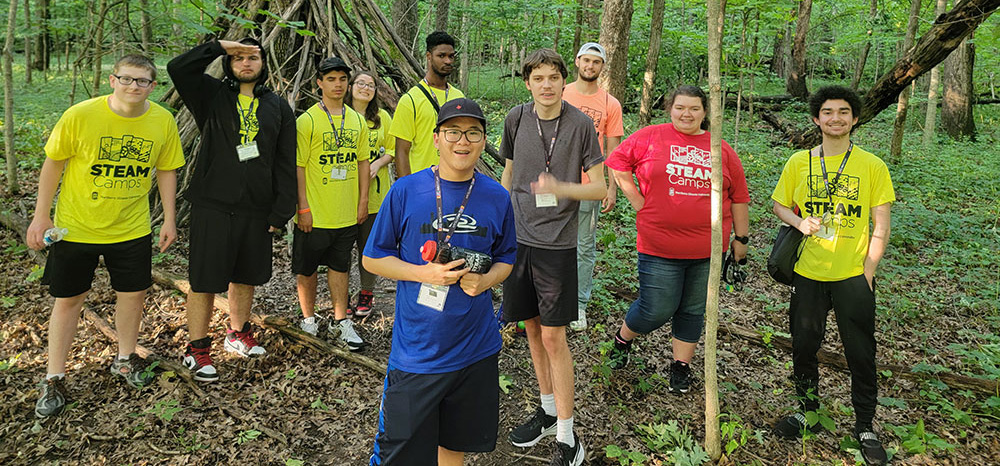
Katelyn was among a group of college-bound high school students with disabilities participating in Huskies BELONG (Building Effective Learning Opportunities and Network Guidance), a free immersive experience designed to prepare students for college life and careers in science, technology, engineering, arts and math (STEAM).
“I didn’t see her going away to college and living in a dorm right after high school,” her mom, Jamie, said. “The Huskies BELONG program helped us picture what could be possible.”
Students enjoy various activities during the BELONG summer camp experience held last year.
The program represents the culmination of nearly a decade of work for College of Health and Human Sciences Professor Bryan Dallas, Ph.D., CRC, LCPC. Dallas began envisioning a college-prep program for students with disabilities shortly after joining NIU.
“Individuals with disabilities are underrepresented in the workforce, particularly in STEAM career fields,” said Dallas. “Supporting the transition to college is one key piece in helping change that.”
Since 2023, Huskies BELONG has received $677,800 in grant funding from the Illinois Community College Board, including $199,800 awarded for the current year. Dallas and College of Liberal Arts and Sciences Professor Shupei Yuan, Ph.D., are currently the co-principal investigators on the grant.
Huskies BELONG begins with a weeklong summer camp where students follow full schedules that blend academic, independent living, and social and recreational activities. They explore careers and participate in hands-on projects with faculty from the College of Engineering and Engineering Technology and the College of Liberal Arts and Sciences, work with NIU Libraries staff, and meet with Career Services and disability support professionals to learn about assistive technology.
Katelyn admitted she was hesitant at first.
“I didn’t know what to expect,” she said. “But it gave me so much more confidence about being in a dorm and being on campus.
“I went in hesitant and left telling my mom I could stay for another week.”
Huskies BELONG continues throughout students’ senior year. Participants meet online with program staff and partners for ongoing support with accommodations and personal care, as well as guidance on college and financial aid applications, résumé building and job interview preparation.
“Having a team to connect with during her senior year has been wonderful,” Jamie said. “It’s helped her feel more secure and more open to exploring her future.”
It is with heartfelt sadness that we announce the passing of Donald E. Kieso, Ph.D., CPA, on Feb. 25, 2026, and we remember the profound and lasting impact he had on NIU students, particularly students in the College of Business.
An NIU accountancy professor who retired from NIU in 1992 after more than 30 years of teaching, Professor Kieso earned the university’s highest award for teaching and gained national recognition as the author of “Intermediate Accounting,” widely considered as the gold standard of financial accounting textbooks for over 50 years.
Kieso was chosen as the first recipient of NIU’s Teaching Excellence Award in 1967. Just five years later, at the age of 36, he was appointed as the chair of NIU’s Department of Accountancy. Kieso continued to be recognized as an outstanding educator and was awarded the Golden Apple Teaching Award four times by his students. In 1986, Kieso received the honor of becoming the holder of NIU’s first named professorship.
In 2013, Kieso and his wife Donna created the Donald and Donna Kieso Endowed Scholarship in Accountancy, which continues to provide support for NIU accountancy students.
Until his passing, Kieso held the title of KPMG Peat Marwick Emeritus Professor of Accounting in the College of Business.
“Don Kieso was an outstanding accounting educator and mentor for thousands of students and faculty,” said Brad Cripe, the Donald E. Kieso Endowed Chair in Accountancy. “His efforts contributed to the national recognition of the Department of Accountancy and the NIU College of Business that continues to this day. We owe a tremendous debt of gratitude to Don and his family for all they have done over so many years for our students and faculty.”
Jerrold “Jerry” Zar, 1941-2026
NIU lost a beloved community member with the passing of 1962 NIU graduate and Professor Emeritus Jerry Zar, Ph.D., on April 2, 2026. He embodied the values and mission of the liberal arts and sciences — as a scientist, educator, musician, philanthropist and engaged community member, with a love of language and a commitment to the arts.
NIU was a part of Zar’s life for over six decades — first as an undergraduate, majoring in biology, then as a newly hired faculty member in 1968. In addition to his role as a tenured faculty member, he served as chair of the Department of Biological Sciences and vice provost for Graduate Studies and Research/dean of the Graduate School. He retired as professor emeritus in 2002 after 34 years of dedicated service to NIU.
Zar was active in the community as a member of Congregation Beth Shalom, Kishwaukee Health System Council, and Kishwaukee Symphony Orchestra, where he played trumpet for 30 years. He also played trumpet in the Kishwaukee Concert Band during its first 12 years and was a founding member of the Kishwaukee Brass Quintet.
Memorial gifts may be made to the NIU Foundation, supporting the student scholarship funds established by Zar and his wife, Carol: the Zar Scholarship in Biology, the Zar Scholarship in Science Education, the Zar Scholarship in Trumpet Studies or the Zar Scholarship in Engineering.
We honor and remember all our beloved alumni, family and friends who have passed away. For a more complete list, we invite you to visit legacy.com to browse by college. Please submit a class note to notify us of the passing of a fellow Huskie.
When NIU received 2025’s national Robert Frank Outstanding Counselor Education Program Award, Suzanne Degges-White, Ph.D., chair of the College of Education’s Department of Counseling and Higher Education, was thrilled.
But she wasn’t surprised.
“Look at the facts,” she said.
NIU was the first in Illinois to receive the seal of approval from the Council for Accreditation of Counseling and Related Educational Programs, a designation maintained continuously since the 1980s.
Degges-White described NIU faculty as highly engaged in their profession, creative in their scholarship and award winners in their own right. She said they consistently model these qualities in the classroom to prepare future leaders in the field.
“It’s excellence through standards,” said Degges-White.
(L-R): Melissa Fickling, TJ Schoonover, Suzanne Degges-White, Dana lsawi, Peitao Zhu and Yenitza Guzman.
“Meanwhile, we’re innovative. We created a system where our doctoral students can come in with a graduate assistantship, which is something we weren’t able to do in the past. And because we’re able to do that, we’re able to attract wonderful doctoral students who are ready to get into the classroom as well as begin their practicum and their research.”
Selective admission to the Counselor Education and Supervision doctoral program improves the opportunity to learn, grow and succeed.
“We’re able to ensure that every student works directly with faculty members. They’re not working on their own,” Degges-White said.
“They’re able to get that guidance and mentorship, and all of our faculty pride themselves on their ability to mentor the doctoral students so that we don’t leave them to figure things out on their own,” Degges-White said. “We ensure they’re on a path to becoming strong educators, strong mentors, strong supervisors.”
Given by the Association for Counselor Education and Supervision (ACES), the Robert Frank award honors a counselor education program that exemplifies the essence of the namesake’s career as a counselor educator — and, yes, that “essence” is standards and innovation.
Faculty members honored were Degges-White, Melissa Fickling, Yenitza Guzman, Kimberly A. Hart, Dana Isawi, Injung Lee, TJ Schoonover and Peitao Zhu.
“We truly embrace the spirit of continuous improvement. We have implemented numerous curricular changes and initiatives to intentionally scaffold and support our students’ scholarly and leadership development,” Zhu said. “As a result, many of our students are now emerging leaders at the regional and national levels.”
Ph.D. students Babatola Arogundade and Yanfei Mao, and Priyanka Jha, ’25, also received national awards.
For students arriving on campus at NIU, the first days can feel both exciting and uncertain. New faces, unfamiliar spaces and the weight of possibility all converge at once.
To Clint-Michael Reneau, NIU’s vice president for Student Affairs, what transforms a student’s uncertainty into confidence, and a campus into a home, is community.
“Community is the difference between a student attending a university and becoming part of something larger than themselves,” he said. “It’s the moment a campus stops feeling like a place and starts feeling like home.”
Across campus, that transformation doesn’t happen by chance. It’s built, intentionally and thoughtfully, through programs, relationships and shared experiences that help students feel seen, valued and connected.
Building the First Connections
From the earliest moments of a student’s arrival, connection is a priority. Week of Welcome events, residence hall move-in, student organization fairs and peer-led programs all serve as entry points. But as Reneau explained, access alone isn’t enough.
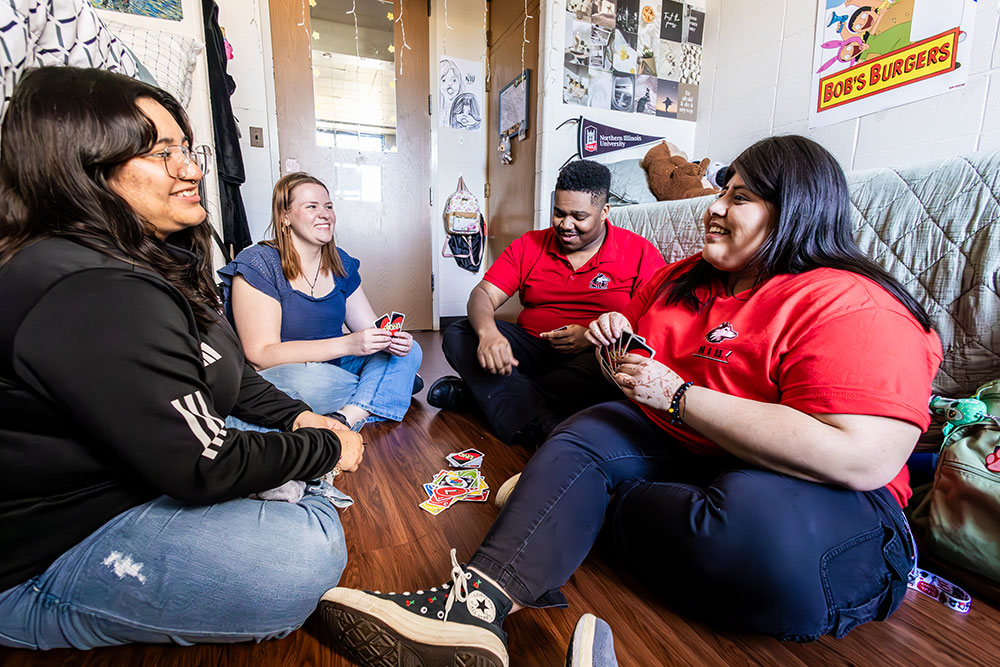
Students play a game of Uno in a dorm room at Neptune Hall.
“What matters most is not just access—it’s invitation,” he said. “Belonging doesn’t happen by accident—we design it, we invite it and we sustain it.”
That philosophy shows up in small but powerful ways: a student leader reaching out to someone standing alone, a community advisor checking in after a long week or a mentor creating space for honest conversation, Reneau explained. These moments, often quiet and personal, are the foundation of something much larger.
“Students don’t persist in isolation,” Reneau said. “They persist in connection. They succeed when they feel seen and when they believe that who they are belongs in the spaces they’re entering.”
Finding Community Through Shared Experience
One of the most immediate ways for students to connect is through involvement—whether during a planned event or through student organizations, leadership programs or fraternity and sorority life.
“Getting involved in a variety of organizations allowed me to grow both personally and professionally while connecting with many incredible people across campus,” said recent graduate Abby Byer, ’26.
Sladjana Grbic, NIU’s director of Student Activities, said they specifically design events and activities for interaction, not just attendance.
“That might look like smaller group elements within large events, structured ways for students to talk to each other, or student leaders who actively pull people in rather than just run the program,” she said.
Along the way, students are welcome to give feedback and insight on the programs and events to ensure that there are a variety of options.
“We recognize that no single program will meet the needs or interests of all students,” Grbic said. “Our approach is to provide a diverse range of opportunities informed by student feedback, emerging trends and the insights of our student leaders, who play a critical role in shaping programming that feels relevant and inclusive.”
As director of Fraternity and Sorority Life, Vicki Gerentes oversees NIU’s Greek Life community, which includes more than 35 organizations and more than 1,000 NIU students.
“Fraternities and sororities at NIU offer a sense of siblinghood that creates community for our students,” Gerentes said. “Joining can make a large university feel smaller and easier to navigate.”
Within these organizations, students build networks that extend beyond their individual chapters to councils, alumni and national communities. But the impact goes deeper than social connection.
“Students have opportunities to lead, plan events and support philanthropic causes,” Gerentes said. “They begin to discover who they want to be and gain confidence through the support of their peers.”
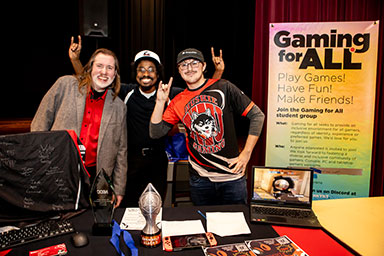
One of the booths at the Fall 2025 Involvement Fair for students to learn about clubs and organizations on campus.
Those experiences often become defining moments in a student’s journey, helping them develop skills, explore their strengths and build relationships rooted in shared purpose.
Across campus, that same commitment is reflected in advising, mentorship and mental health support systems designed to meet students where they are.
“Belonging is reinforced when students know that support is not something they have to earn—it’s something they can expect,” Reneau said.
Whether through counseling services, mentorship or simply a staff member checking in, students are consistently reminded: You matter here.
Bonds That Last Beyond Graduation
While many connections begin during an NIU student’s first year, their impact often lasts far longer.
In residence halls, classrooms and student organizations, relationships are built over time through shared experiences, challenges and growth. In fraternity and sorority life, traditions play a powerful role in sustaining those bonds across generations.
“Traditions give us shared experiences that binds generations together,” Gerentes said, pointing to long-standing events like step shows and campus traditions such as the annual Tugs tournament. “Alumni and current students can connect through those shared experiences.”
Even after graduation, those connections endure. Alumni affinity groups provide a sense of familiarity and belonging, no matter where life takes them.
“What we’re really doing is creating the conditions for trust, accountability and shared purpose,” Reneau said. “The relationships students build here don’t end at graduation—they become part of who they carry into the world.”
When Rena Cotsones came to NIU in 1999 to establish the university’s first Office of Community Relations, little did she know she would go on to earn her master’s and doctoral degrees there and help build NIU’s Division of Outreach, Engagement and Regional Development (OERD) into a force for good in the region and beyond.
Over the years, Cotsones has cultivated relationships with nonprofits, community colleges, and civic and industry leaders. She’s helped to establish community-based, industry-integrated programs and develop shared leadership for community engagement across NIU. Her ambitious vision has built upon the legacy of former OERD Vice President Anne Kaplan and helped NIU secure its position as a Carnegie Engaged Institution and a trusted partner in the region.
“Engagement is a central pillar of NIU’s mission,” NIU President Lisa C. Freeman said. “In her role as vice president, Rena has advanced an inclusive, collaborative and institutionally aligned vision for community engagement across our university.
“Her steadfast commitment to authentic partnership has strengthened community trust and established a strong foundation for continued growth and impact in the years ahead.”
Looking back, Cotsones says she was always interested in civic and community issues in her small hometown of Kankakee, Illinois. She studied journalism and started her career as a television reporter but soon became unsatisfied to just observe and report.
“I wanted to be an active participant, bringing people together to solve the problems and capitalize on the opportunities I was seeing,” Cotsones said. “NIU was the perfect place to make that happen.”
Cotsones’ colleagues recently summed up her contributions with four key words: “strategic,” “effective,” “collaborative” and “fun.” They also added “panache,” reflecting Cotsones’ penchant for ensuring lively, colorful environments for meetings.
Cotsones is most proud of the collective work OERD, the NIU Engagement Task Force and the Engagement Roundtable have accomplished over the past six years.
“Community engagement has always been part of NIU’s DNA, but right now I believe the momentum and support for community engagement across the university is the highest it’s ever been,” Cotsones said. “We’ve brought people together around a shared vision, all working for the common good, and it is a joy to see the results around campus and beyond.
 -
 LOUIS GEORGE APOSTOL, M.B.A., J.D. ’78, will continue to serve another term as public administrator of Cook County.
 Constance Litwiller (née Gehrke), M.S., was inducted into the Plainfield School District 202 Foundation for Excellence Alumni Hall of Fame for her contributions to nursing education for 34 years.
 Glenn Fish was named president and CEO of J.M. Huber Corporation.
 Bryan Miller retired from the Illinois Air National Guard’s 182nd Airlift Wing.
 Hon. Thaddeus Wilson, J.D., was appointed by the Illinois Supreme Court to the First District Illinois Appellate Court.
 John “Ski” Sygielski, Ed.D., is set to retire following a 35-year career in higher education — marked by 22 years as president of three community colleges, including 15 years at the helm of Harrisburg Area Community College.
 Kristen Brown was appointed to serve on the NCAA Division I Women’s Basketball Committee.
 Shawna Sterling received a 2026 Rockford-area Golden Apple award.
 Hayley Gotzsche received a 2026 Rockford-area Golden Apple award.


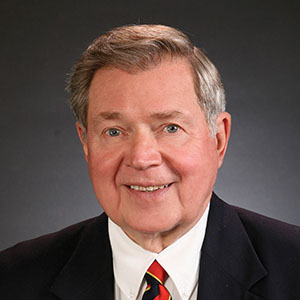 It is with heartfelt sadness that we announce the passing of Donald E. Kieso, Ph.D., CPA, on Feb. 25, 2026, and we remember the profound and lasting impact he had on NIU students, particularly students in the College of Business.
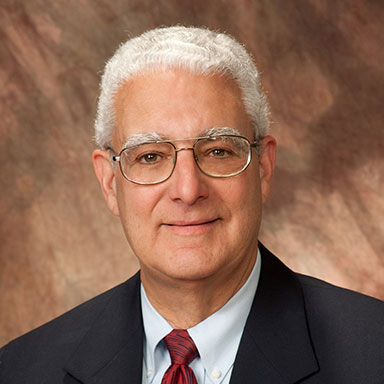 NIU lost a beloved community member with the passing of 1962 NIU graduate and Professor Emeritus Jerry Zar, Ph.D., on April 2, 2026. He embodied the values and mission of the liberal arts and sciences — as a scientist, educator, musician, philanthropist and engaged community member, with a love of language and a commitment to the arts.